 IMZM Research Studio
Reader’s guide to the source study
How employees make sense of internal marketing
A service reaches the customer through many employees. This research asks how people in different roles understand the support they give one another, and how those relationships may contribute to service value.
At a glance. The paper examines hospital, banking and university service settings. It uses picture based interviews and metaphor coding with employees at three organisational tiers. Its main contribution is a proposed mapping between seven recurring metaphors and five internal marketing components.
What is the research question?
Internal marketing treats employees as internal customers who need communication, support, development and appropriate rewards to serve external customers well. The paper explores how employees describe that support through images and stories. It looks beyond the person at the service counter to the people and decisions behind the service.
The paper frames three linked forms of value: direct customer service value, partnership around the brand and a sense of ownership of the organisation’s purpose. These are the author’s conceptual interpretation of how employee roles may connect to service performance.
Who and where was studied?
The paper describes an embedded case design: three service contexts, each examined across three employee tiers. It reports 30 participants per tier in each context, for 270 employees in total.
In the study’s operational definition, Tier I is closest to external customers; Tier II provides supporting work; Tier III contributes higher level organisational support. Exact job assignments vary by context.
How were employee meanings explored?
Participants discussed photographs that expressed their feelings and thoughts about working with and supporting colleagues. The paper describes photo elicitation and the Zaltman Metaphor Elicitation Technique (ZMET), including depth interviews and laddering questions that move from a pictured event to its consequences and underlying meaning.
- Choose and discuss images. A picture becomes a prompt for a personal account, rather than a fixed survey answer.
- Probe the meaning. The interviewer asks what is happening, why it matters and what the experience says about support at work.
- Code patterns across cases. Stories were compiled and coded with QSR NVivo to compare service settings and employee tiers.
- Relate themes to internal marketing. The author compares the emerging metaphors with proposed components of an internal marketing mix.
The IMZM study workspace follows this broad interview logic. Its fields and exports are an app adaptation, not a reproduction of a validated questionnaire.
Pictures from the three service settings
The paper presents a picture bank for NLCIL healthcare, CUB banking and SRM educational services. Select a setting below, then browse the pictures by employee tier. These images are prompts for eliciting stories; their meaning depends on the participant’s explanation.
NLCIL · Healthcare
Images reproduced from the paper’s picture table for employees in the healthcare service setting. Picture numbers indicate their order within each tier; the source does not provide a separate caption or participant explanation for every image.
Tier 1 · 12 pictures












Tier 2 · 12 pictures












Tier 3 · 10 pictures










CUB · Banking
Images reproduced from the paper’s picture table for employees in the banking service setting. Picture numbers indicate their order within each tier; the source does not provide a separate caption or participant explanation for every image.
Tier 1 · 17 pictures

















Tier 2 · 18 pictures


















Tier 3 · 18 pictures


















SRM · Education
Images reproduced from the paper’s picture table for employees in the education service setting. Picture numbers indicate their order within each tier; the source does not provide a separate caption or participant explanation for every image.
Tier 1 · 18 pictures


















Tier 2 · 17 pictures

















Tier 3 · 17 pictures




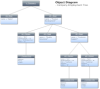












What did employees’ images reveal?

The paper identifies seven “giant metaphors” and associated meanings. These are interpretive themes, not seven mutually exclusive employee types. An image can carry several meanings depending on the participant’s story and work setting.
| Theme | Illustrative image | Associated meanings |
|---|---|---|
| Balance | Rose | Counselling, equality, nature, relaxation |
| Transformation | Butterfly | Development, challenge, realisation |
| Journey | Home | Life, sacrifice, travel |
| Container | Theatre | Being within a setting; the paper also associates this image with worship |
| Connection | Handshake | Care, family, friendship, love, teamwork and welcome |
| Resources | Piggy bank | Knowledge, money, support, technology and energy |
| Control | Guidance or protection | Belief, focus, individuality, convenience and protection |
The source’s coding table also counts metaphor references across services and tiers. Those counts describe coded material; they should not be read as the number of participants holding each view.
How does the paper connect metaphors to management?
The author proposes a conceptual match between internal marketing activities and the meanings employees expressed:
| Internal marketing component | Metaphor theme | Management question it raises |
|---|---|---|
| Vision | Control | Do people understand the direction and their role? |
| Development | Journey and transformation | Can employees learn and grow into changing service roles? |
| Rewards | Resources and container | Are support, recognition and the working setting adequate? |
| Empowerment | Connection | Can colleagues cooperate and act on customer needs? |
| Internal communication | Balance | Can employees speak, listen and resolve tensions? |
This mapping is a useful lens for discussing internal service conditions. The paper presents it as a construct match and direction for measurement, rather than proof that changing one component will cause a particular service outcome.
Recommendations
The evidence suggests that internal marketing should be managed as a coordinated employee-support system rather than as isolated communication or training activity.
- Diagnose each employee tier separately. Conduct image-based conversations with front-stage, support and decision-level employees so differences in service experience are not hidden by organisation-wide averages.
- Translate metaphors into action. Use balance to review communication, connection to examine empowerment and teamwork, journey and transformation to plan development, resources and container to assess rewards and the work setting, and control to clarify vision and role direction.
- Create cross-tier service forums. Bring representatives from all three tiers together to compare service stories, identify broken hand-offs and agree on practical improvements.
- Close the feedback loop. Record the issue raised, responsible manager, intended action and review date; then return to employees with evidence of what changed.
- Use the IMZM process ethically. Obtain informed consent, protect identities and treat participant-selected images as prompts whose meanings must come from the participant.
The IMZM workspace can document stories, missing images, laddering chains, sensory associations and participant mental models for later cross-case review.
Managerial implications
- Internal service quality precedes external service consistency. Managers should inspect how information, authority, resources and emotional support move between employees before attributing service failure only to frontline staff.
- One intervention will not fit every tier. Front-stage employees may need rapid coordination and discretion, support employees may need clearer hand-offs and resources, while senior roles may need stronger feedback about how policies affect service encounters.
- Metaphors expose issues that routine surveys may miss. Images of journeys, containers, connection or control can surface feelings about sacrifice, belonging, isolation, trust, protection and constraint that fixed-response items may not reveal.
- Internal marketing requires shared ownership. Human resources, operations, marketing and unit leadership should jointly review the employee journey rather than assign internal marketing to one function.
- Improvement should connect employee evidence to service outcomes. Action plans should be monitored alongside waiting time, error recovery, complaints, employee participation, service reliability and customer experience.
Directions for future research
- Validate the proposed construct mapping. Develop and test measures linking vision, development, rewards, empowerment and internal communication with the seven metaphor families.
- Replicate across organisations and sectors. Extend the design beyond the three focal settings to public utilities, hospitality, retail, transport and digital services, using multiple organisations within each sector.
- Test tier and context differences. Compare metaphor patterns across employee levels, occupations, regions and organisational ownership using adequately powered samples.
- Use longitudinal and intervention designs. Collect evidence before and after internal-marketing initiatives to examine whether changes in employee meaning precede improvements in service behaviour and outcomes.
- Combine qualitative and quantitative evidence. Integrate ZMET interviews, validated scales, network or process measures, customer indicators and objective operational data.
- Assess coding reliability and participant validation. Use multiple coders, transparent codebooks, intercoder agreement and member checking to strengthen interpretive credibility.
- Evaluate digital IMZM applications. Study whether app-supported elicitation improves completeness, consistency and usability without weakening interviewer rapport, confidentiality or participant control.
What should readers keep in mind?
This is an exploratory embedded case account. The paper’s three organisations and employee roles provide context for interpretation; they do not establish that the same patterns hold in every service organisation. The proposed links between internal marketing, metaphor themes and performance should be tested with clearly defined measures and independent outcome evidence before making causal claims.
The source manuscript contains some inconsistent context labels and combines descriptions of interviews, coding and proposed measurement. This guide follows its clearly stated three service settings and 270 participant design, and distinguishes reported observations from suggested future use.
Source: A. Selvarasu, “Embedded Case Research of Internal Marketing on Service Performance,” manuscript supplied for this IMZM reader page. This page is a plain-language adaptation; consult the original paper for full tables, definitions and references.